Websites Explained
Most people think a website is a collection of pages, pictures, buttons, and text. And yes — those things are part of it. But a website is much more than what you see on the screen. It’s a living, working system that represents your business, communicates your value, and guides customers toward taking action.
Understanding what a website actually is helps business owners make smarter decisions, avoid costly mistakes, and build something that supports growth instead of just “existing online.”
Let’s break it down in simple, practical terms.
A Website Is Your Digital Storefront
If your business had a physical location, you’d want:
-
a clean entrance
-
clear signage
-
organized shelves
-
helpful information
-
a place for customers to take action
Your website is the digital version of that storefront.
It’s where customers:
-
learn who you are
-
understand what you offer
-
decide whether they trust you
-
choose whether to contact you, book you, or buy from you
A website isn’t just a brochure — it’s a business tool.
A Website Is a Communication System
Every part of your website communicates something:
-
your images communicate quality
-
your words communicate clarity
-
your layout communicates professionalism
-
your navigation communicates ease
-
your calls‑to‑action communicate confidence
When these elements work together, your website becomes a clear, persuasive conversation with your customer.
When they don’t, your website becomes noise.
A Website Is a Customer Journey
A good website guides visitors from curiosity to confidence.
It answers questions in the right order:
-
Who are you?
-
What do you offer?
-
Why should I trust you?
-
How do I get started?
This journey is intentional. It’s designed. It’s structured.
A website that lacks this journey leaves customers confused — and confused customers don’t convert.
A Website Is a Business Asset
Just like your domain name, your website is an asset that grows in value over time.
A strong website:
-
increases trust
-
improves marketing results
-
boosts search visibility
-
supports advertising
-
strengthens your brand
-
generates leads
-
drives sales
It’s not an expense. It’s an investment.
And when built correctly, it becomes one of the most valuable assets your business owns.
A Website Is a Technical System (But You Don’t Need to Be Technical)
Behind the scenes, a website connects to:
-
hosting
-
security
-
performance tools
-
analytics
-
email systems
-
search engines
-
social platforms
But you don’t need to understand the technical details.
You just need to understand the purpose:
Your website is a system that must be fast, secure, reliable, and easy to use.
The technical work is our job. The clarity is yours.
A Website Is a Reflection of Your Identity
Your website expresses your brand:
-
your tone
-
your style
-
your values
-
your professionalism
-
your promise to the customer
A website that looks inconsistent or outdated sends the wrong message.
A website that feels polished and confident strengthens your identity and builds trust before you ever speak to a customer.
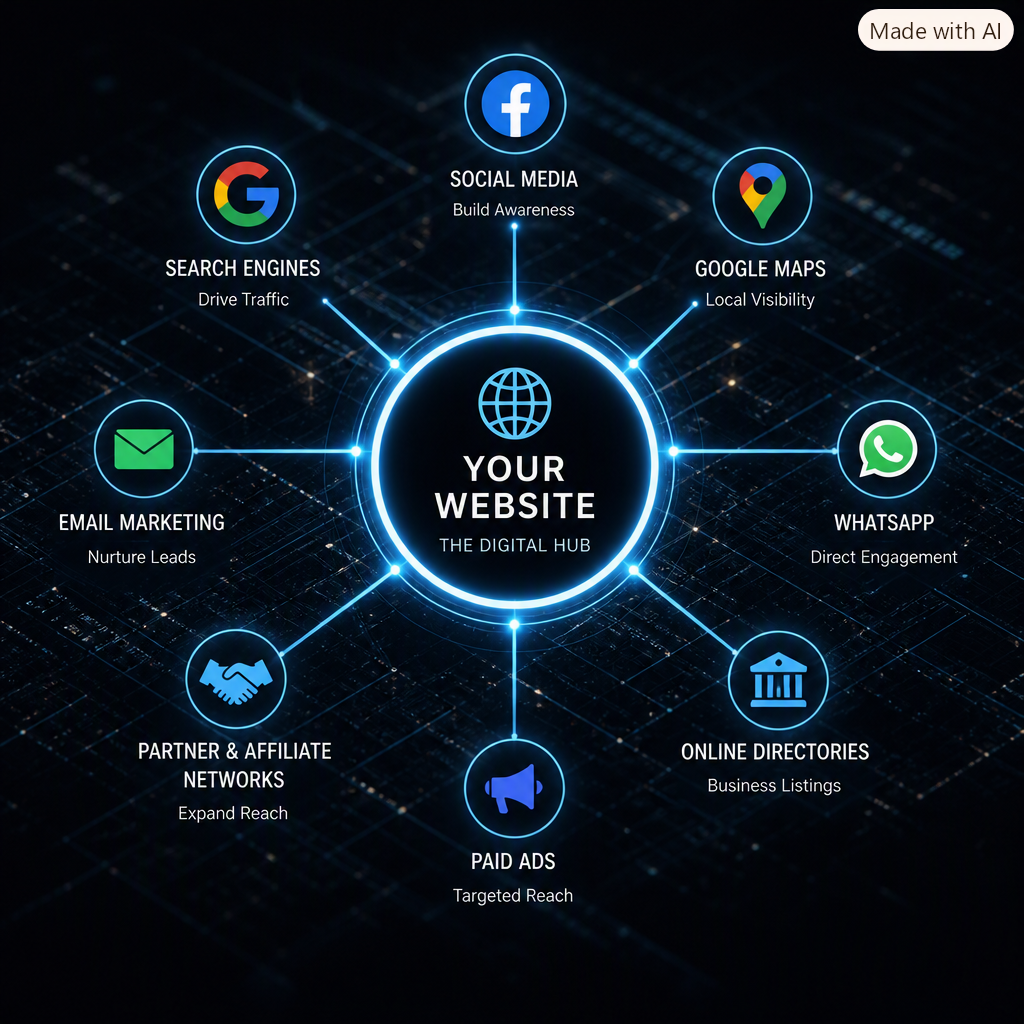
A Website Is the Hub of Your Entire Digital Strategy
Everything connects back to your website:
-
your social media
-
your Google Business Profile
-
your advertising
-
your email marketing
-
your SEO
-
your content
-
your brand materials
Your website is the center of your digital universe. If the center is weak, everything around it struggles.
If the center is strong, everything around it performs better.
So What Is a Website, Really?
A website is:
-
your storefront
-
your communication system
-
your customer journey
-
your business asset
-
your brand expression
-
your digital hub
It’s not just pages and pictures. It’s the foundation of your online presence.
In Part 2, we’ll explore the core components that make a website work, including structure, content, design, and user experience — all explained in simple, non‑technical language.